
In Nelson – and across New Zealand – women are a driving force in emergency services. Fearless and focused, they match resilience with compassion, stepping in when crises strike. Jen Chaddock, Prue Young, and Ashley McCabe bring passion to their roles and encourage anyone with a heart for helping others to seize the many opportunities across our emergency services.
Words: Adrienne Mathews | Photos: Tessa Claus
Answering the call
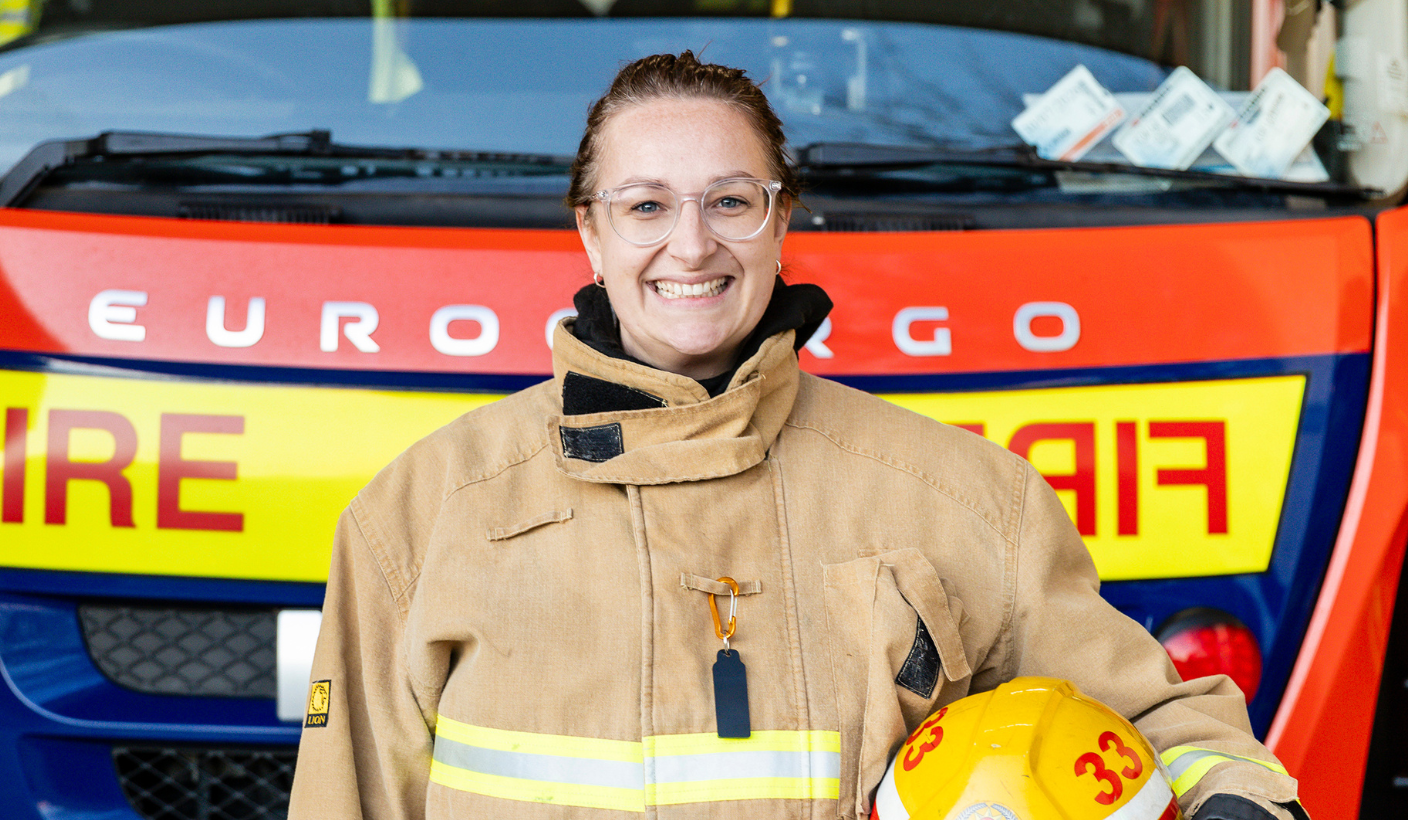
When the siren sounds and the pager goes off, Ash McCabe drops everything. As a volunteer firefighter, she’s part of the frontline team that shows up when her community needs help most. It’s a role that demands courage, adaptability, and teamwork, and for Ash, it’s also deeply personal.
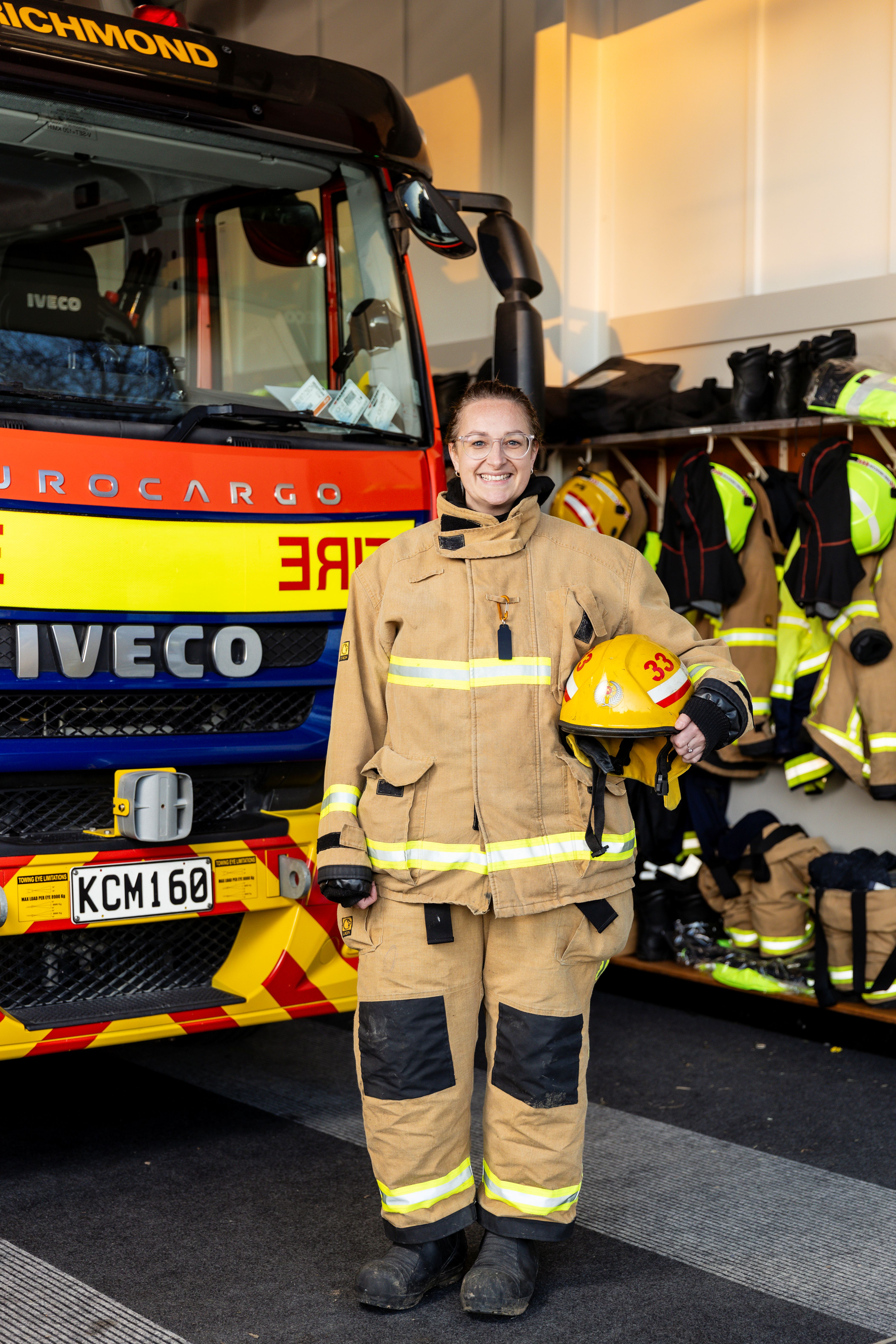
“I love helping people,” she says simply. “Being able to make a difference within our community is such a privilege. I wanted a new challenge; to be part of a team where I could grow, learn new skills, and contribute to something bigger than myself.”
Ash wears multiple hats within the Richmond Brigade to which she belongs. As well as responding to emergency callouts as an operational member, she serves as the Brigade Secretary and manages the team’s social media presence. Her day job as an insurance account manager couldn’t be further removed from the high adrenaline calls she answers when a crisis has occurred, but she thrives on the balance between the two worlds.
For Ash, the most rewarding moments are also the simplest. “When you arrive and see the relief on someone’s face, knowing you’re there in what might be one of the worst moments of their life, and that you can help, is what it’s all about.”
There’s also a quieter reward: the personal growth she’s witnessed in herself since joining. “You can’t help but change. You learn resilience, teamwork, and confidence in ways you never expected.”
The role, of course, comes with its challenges. The emotional weight of certain jobs can linger, but Ash is grateful for the support network within the Brigade. “We’re really lucky. We look out for each other, debrief, and make sure no one is carrying that load alone.”
Training is constant, with weekly sessions ensuring every member is ready for anything. “There’s so much to learn, and consistency is key,” she explains. “When it all starts to click, when you realise those skills are becoming second nature, it makes all the hard work worthwhile.”
What surprised Ash most when she joined was the sheer variety of calls. “It’s not all about fires. We assist St John with medical events, attend car accidents, alarm activations – you name it. No two calls are ever the same, and that keeps you on your toes.” Even more unexpected has been the camaraderie. “This team has become a second family. The friendships, the inclusivity, and the strong bond we share is something really special.”
When asked what makes a good firefighter, Ash doesn’t hesitate. “Compassion, problem-solving, adaptability, and teamwork. Those are essential, no matter who you are.” And her advice to women considering the emergency services? “Go for it. Don’t hold back. You’re stronger than you think you are. You’ll be an asset, not just because of what you can do, but because of who you are.”
For Ash, firefighting is much more than answering calls. It’s about community, growth, and the quiet pride that comes from standing ready, no matter what the situation.
Ready to go
When disaster strikes – whether it’s a flood, an earthquake, or a missing tramper in the bush – volunteers like Jen Chaddock are the ones quietly stepping forward. Jen serves with both Civil Defence and, more recently, Land Search and Rescue New Zealand, two organisations that demand resilience, adaptability, and a willingness to face the unexpected. For her, the journey started young.
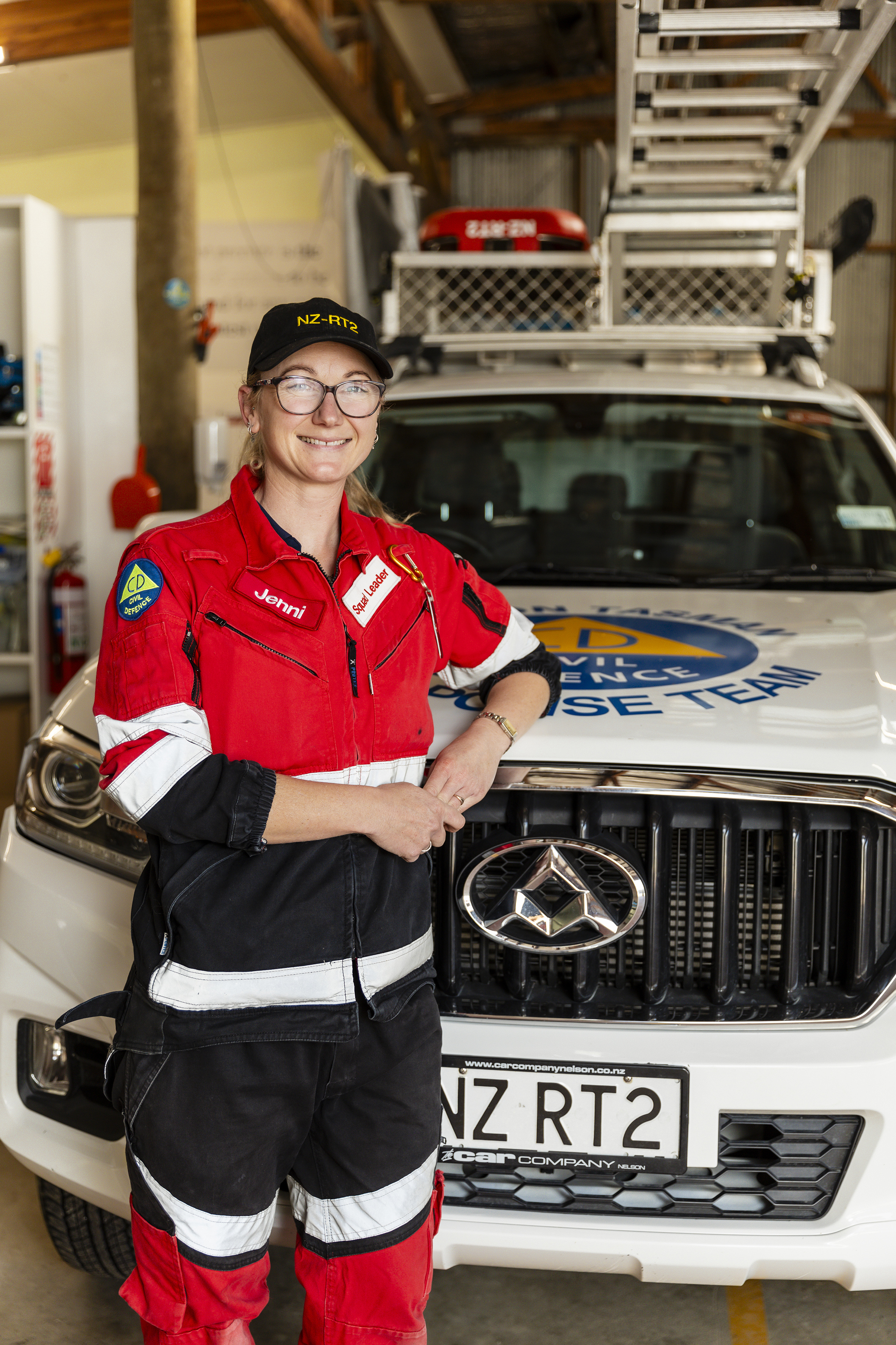
“I was 13 when my dad took me along to Civil Defence training and sometimes they would use me as a patient,” she recalls. “I’d watch these amazing people giving up their time to help others, and I wanted to grow up to be one of them; part of a team that helps bring people home safely or at least provide families with answers when that isn’t possible.”
She had to wait until she turned 18 to officially join, but once she did, the work quickly became a central part of her life. Throughout the years, Jen has responded to some of the country’s biggest emergencies, including the Christchurch and Kaikōura earthquakes, Cyclone Gita, and the Nelson floods. Each situation has tested not only her technical skills but also her emotional endurance.
In Christchurch, her team worked in the CBD, assessing unstable buildings that hadn’t yet been searched. “It was busy, intense, and very sad,” she says, “but there’s also that moment where you’re grateful to be part of the response rather than sitting at home wishing you could do something. I’ve always believed that if you can, you should.”
Her Civil Defence team’s role isn’t only search and rescue – it is also gathering vital information on the ground. During the Nelson floods, Jen and her squad acted as the local council’s eyes, reporting damaged infrastructure and assessing how well communities were coping. “Being a local vet nurse gave me an extra level of understanding for rural people who were affected. Sometimes just talking with them could make a positive difference.”
Land Search and Rescue adds another dimension. Training covers medical response, navigation, and tracking, which gives new opportunities to upskill to prepare for any circumstance. “We train hard so we can rescue easy,” Jen says. “However, nothing truly tests you until the call comes in. That’s when you find out if your gear, your resolve, and your resilience are up to the job.”
For all the technical skill required, Jen insists personality is just as important. “A can-do attitude is essential. You need empathy, self-management, and the ability to take on someone’s burdens for a moment, then move on without carrying those emotions with you.”
She’s also seen a positive shift in the representation of women in these important roles. “It’s great to see so many women stepping up now in Civil Defence and Land Search and Rescue and undertaking a wide range of tasks, including the in-the-field incident ones, which is fantastic.”
For Jen, the rewards far outweigh the sacrifices. “The value you get is massive. There is companionship, community, and the knowledge that you’ve made a difference. Time is the biggest currency, but if you can give it, what you get back is amazing.”
A life above the clouds
When Prue Young talks about her work, her eyes light up in a way that makes you understand instantly that this is not just a job, it’s a calling. As a critical care flight paramedic, she spends her days balancing life-and-death decisions with the whir of helicopter blades above some of New Zealand’s most rugged landscapes. It’s high-stakes work, but for Prue, the seeds were sown long before she ever set foot in an aircraft.
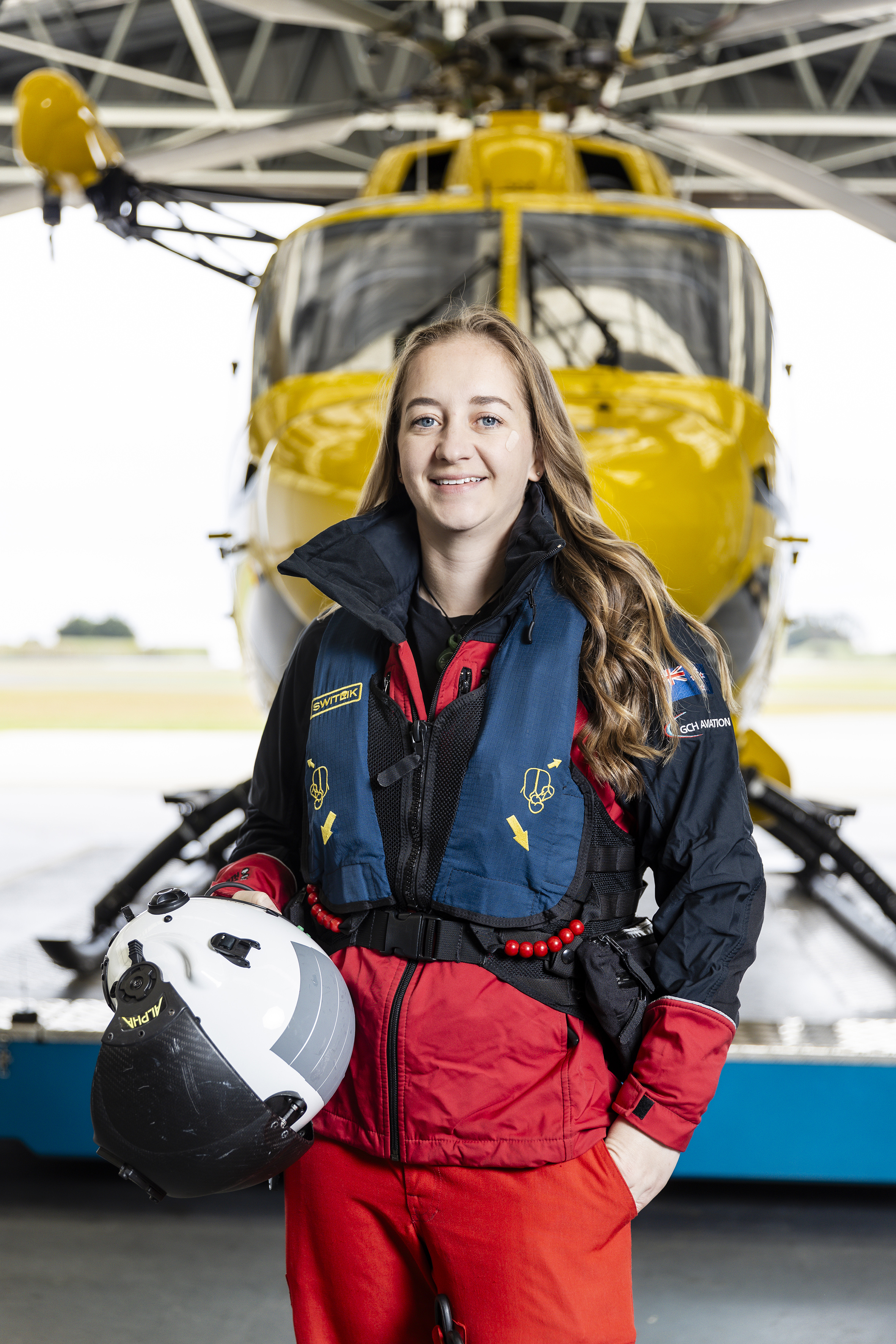
Her mother likes to remind her of a moment when, as a toddler, she raced across the playground to help another child who had fallen. That instinct, to comfort and assist, never left her. “I always thought I’d be a doctor,” she recalls, “but after school, someone suggested volunteering with St John. Within six months, I knew I was hooked.”
The road from volunteer to critical care flight paramedic is a steep one. First came a three-year paramedicine degree, then a postgraduate diploma in critical care, followed later by a master’s degree in aeromedicine. “In total, about 10 years of university,” she says with a shrug, as though it were just another part of the uniform. Behind the understatement lies years of late-night study sessions, exams, and relentless training layered on top of front-line emergency work.
An important turning point came for her in Dunedin, where ambulance staff rotated between road shifts and time on the helicopter. “The crews talked about the camaraderie, the thrill of flying, the chance to reach people in the most remote places and how much they loved it. They were like a family,” she says.
For someone who also loved the outdoors, this was the perfect fit. Prue began chipping away at further study while working full-time, quietly preparing herself for her dream role – one that came sooner than expected.
Now, whether it’s winching a patient off a fishing boat in rough seas, racing to a farm accident in the Marlborough Sounds, or transferring a patient from one town to another, no two days are ever alike. “Every patient is different. Every case has its quirks and with helicopters, you add another layer of complexity. There’s landing safely, working in confined spaces, adapting quickly. It keeps you on your toes.”
The work is demanding, physically, emotionally and mentally. She’s candid about the tough calls, the ones that stay with her. They are not always the headline accidents, but the quiet tragedies: an elderly woman lying on the floor all night because she didn’t want to bother anyone, only to grow dangerously unwell. “Those are the ones that tug at you.”
Yet what shines through is the deep sense of purpose, the “warm fuzzies,” as she calls them, that come from helping someone on their worst day and doing it as part of a tight-knit crew. “We get to see extraordinary places, work with incredible people, and make a real difference. That’s a privilege.”
Her advice for anyone considering following in her footsteps is both encouraging and realistic: “Do it. It’s a phenomenal job but be prepared for years of training which never stops.”

