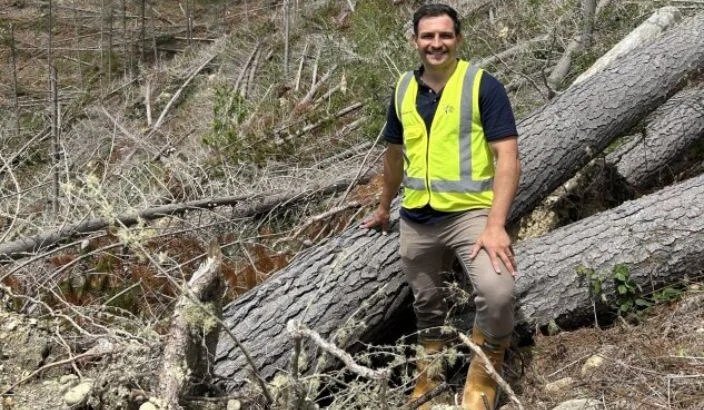
The massive effort to recover windfallen trees after the June and July storms forced OneFortyOne—formerly Nelson Forests—to quickly find ways to boost capacity and coordinate a rapid response.
For Sam Nuske, the idea of getting multiple companies to work together to utilise spare capacity felt almost instinctive.
He says, quite humbly, that his previous roles and experience made it “feel quite natural to know that there were other options on the table than just making OneFortyOne try and increase its own production to an unsustainable level”.
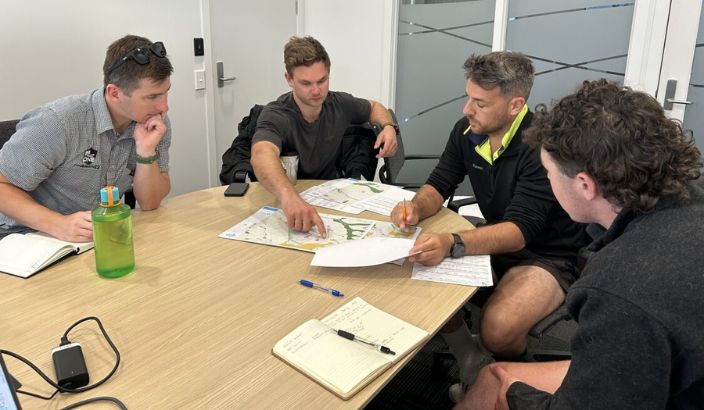
Instead of scaling up internally, Sam reached out to forest management firms that already had logging, roading, and log truck crews working for them, including NZ Forestry, M&R Forestland Management, OneForest, PF Olsen, and Tasman Forest Management, and opened a conversation about how they could tackle the salvage together.
The response was immediate and positive, and for the first time, Tasman’s independent forestry sector united for a coordinated salvage operation of 5,400 hectares of storm-damaged forest.
“It’s been really refreshing,” Sam says.
“We often play in our own sandpits and get a bit pigeonholed, but everyone working together has opened up relationships. There’s been a lot of goodwill when the cards are down, it gives you real confidence in our forestry industry.”
Heavy rain and wind in early November toppled more weakened trees. Including this latest damage, Sam estimates the salvage operation is only about 20% complete, with more than a year’s work ahead. He says the effort has been remarkably smooth so far, thanks to the flexibility and attitude of everyone involved.
“Truck drivers are being flexible and working nights to deliver logs to the port, reducing daytime port activity for other port users. Logging crews are putting in the hours to get the wood before it begins to rot.”
Despite the workload, Sam says the spirit on the ground has been exceptional.
“Not a single day have we had someone say they can’t take it anymore.”
Of course, the collaboration hasn’t been without its challenges. Sam says one of the trickiest aspects has been reconciling differences in how each company operates.
“Different companies do things differently, and we’ve all had to compromise on how to work together.”
Port Nelson has also stepped up. While the port isn’t designed for such large log volumes, Sam says it’s been good to see adequate ships come in.
“C3 (logistics handler for forestry and other cargo) have done an amazing job accommodating the extra wood—they’ve increased staff and extended their operating hours.”
And it’s all important to many, as if the logs aren’t recovered and exported to overseas markets, they will simply rot on hillsides—providing no income to Tasman’s forestry workers, landowners, or contractors. The surge in storm-related wood has significantly increased export volumes.
Sam says the region was already gearing toward higher export levels, but it remains to be seen whether the market can absorb the spike.
“We’re still coming to terms with everything, and there are some unknowns. We’ll know more in a few months.”
Sam acknowledges that log prices remain low, with major buyers like China slow to recover in their construction sectors, which typically use high volumes of New Zealand pine. But despite softer returns, he believes the region is in a strong operational position.
“Everyone in the supply chain can keep producing wood without having to worry about production constraints.”
He notes that in an industry where companies usually compete hard for contracts, this situation has opened the door for collaboration that otherwise never would have happened.
“Everyone is usually competing. But with the size of the issue, all the competitive stuff gets pushed aside. It’s made for much more enjoyable logging for all.”
If any logging contractors/managers have any availability to assist with the windthrow before December 2026 please reach out to OneFortyOne.
