
Tasman rabbits are doing what rabbits do best – they’re breeding like rabbits and their population is booming.
Tasman District Council’s senior biosecurity officer Lindsay Barber says the region is not going to become the rabbit-infested landscape of Central Otago though. The cute but invasive pest does best in a dry, hot climate where the grass is short – which is why they like our lawns so much.
Plus, he is confident the cyclical calicivirus will come around again and hit the population. “They’re having a boom year. But they will have a bust. If they’re big numbers at the moment, the more prone they are to collapse.”
In the meantime, it’s like a scene from Watership Down on many Tasman lawns and numbers are still growing while the virus is absent. Calicivirus was introduced in 1997 as a way to control the plague of rabbits in Otago. Lindsay says it was initially smuggled into the country illegally in a football bladder, before being formally released by the Ministry for Primary Industries and transported around the country.
“It was super effective for the first few years. But you get a bit of immunity built up. It only did the trick for a few years and now Central Otago is back to levels prior calicivirus. Central Otago is the perfect environment for them, though.” An update of the virus, K5, was introduced in 2018, including Tasman, but Lindsay says the virus was too close to the original virus and had little success. While calicivirus is not as effective as it was initially, he says it still knocks the rabbit population from time to time.
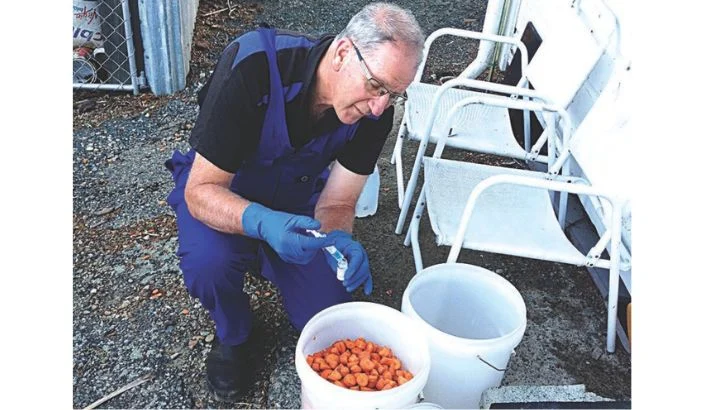
Until then, he says some of the best ways for landowners to control rabbit numbers is using infrared scopes on .22 calibre rifles or slug guns – as long as it is a safe environment to use them, without close neighbours. The other option is Pindone pellets.
“There’s no point controlling rabbits on a small holding if your neighbours aren’t doing anything. My advice ... with Pindone is to talk to your neighbours and use it together.”

