The New Zealand–India Free Trade Agreement (FTA), announced in late December 2025, is set to reshape trade opportunities for New Zealand’s primary industries, particularly agriculture, horticulture and forestry.
Once fully phased in, about 95 per cent of NZ’s current exports to India will be tariff-free or face sharply reduced tariffs, with more than half becoming duty-free from day one.

However, not all sectors will benefit equally. Sheep meat, wool and forestry products are the biggest winners. Tariffs on forestry products, previously between 5.5% and 11%, will be eliminated immediately. Sheep meat will also enter India tariff-free from day one, removing the roughly 33% tariff and putting New Zealand on equal footing with Australia, which already enjoys zero tariffs under its FTA.
Kerry Irvine, a sheep and beef farmer in Tapawera and Nelson Federated Farmers president, says the deal is a major boost.
“For red meat it’s a real win. India is a huge market and very untapped. To get a trade deal with India is great,” Kerry says. He adds that while tariff cuts are positive, farm-gate returns may take time to rise as demand and supply chains develop.
“It secures a market with the potential for a lot of volume. It allows us to diversify from relying solely on China and the UK.”
The wine sector will benefit, but progress will be slow. India’s steep 150% tariff will gradually reduce to 25–50% by year 10.
Chris Seifried from Seifried Estate calls the agreement “absolutely fantastic news, but notes the complexity of exporting to India.
“India has a lot of different states, and some have alcohol bans. Each state has different labelling and taxes,” Chris explains.
He says tariff removal helps, but New Zealand wine targets only the top 2–3% of Indian consumers due to its premium price.
“It’s such a massive place that you only need one or two buyers to sell a large amount of wine,” he says, adding that opportunities will grow as the market develops.
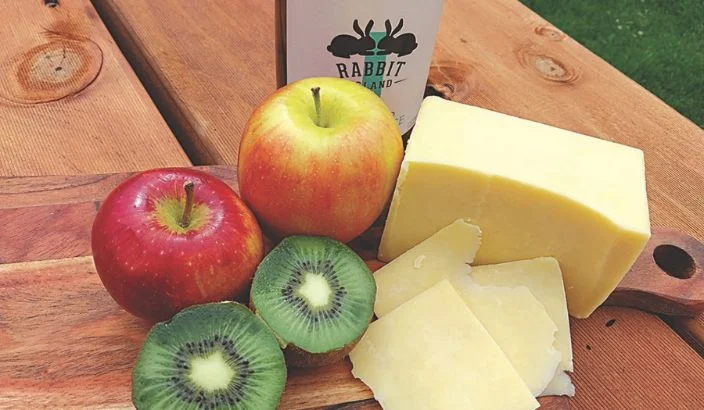
Horticulture is another big winner. Apple tariffs drop from 50% to 25% immediately for 32,500 tonnes, rising to 45,000 tonnes over six years.
Golden Bay Fruit chief executive Evan Heywood says the current 50 percent tariff - paid by importers - significantly increases the overall cost of buying apples. While New Zealand already exports apples to India, he says a reduced tariff rate would make the market far more attractive.
“It’s definitely an advantage having some reductions on tariffs,” Evan says.
“We export to India now, but if we can get a better price by tariff reduction, it could allow us to ship more fruit there.”
Heywood notes that improved access to the Indian market would also help diversify export options for growers, easing pressure on other destinations.
“Markets like Vietnam can become crowded very quickly, which has a negative impact on prices.
“Better access to India gives apple growers more choice and helps maintain and improve returns, rather than being forced into highly competitive markets where there is a lot of volume,” Evan says.
He adds that the agreement is the result of extensive work by industry bodies such as New Zealand Apples and Pears, but acknowledges there is still more work ahead.
Kiwifruit tariffs fall to zero within quota. Cherries, avocados, persimmons, blueberries and mānuka honey will see phased reductions over time.
Dairy sees little benefit. Most products, including milk powder, cheese and yoghurt, remain excluded, limiting gains for New Zealand’s largest export sector. India’s 70 million dairy farmers continue to be prioritised.
Supporters say the deal levels the playing field with competitors like Australia, while critics argue it delivers too little for New Zealand, particularly for dairy.
Expected to take effect in late 2026 or early 2027, the real test will be whether it delivers stronger returns and long-term growth.
There are also whispers of direct flights from India to New Zealand, potentially from Delhi, which could boost tourism and trade between the two countries.
Got a rural story you’d like told? Email sara@topsouthmedia.co.nz
