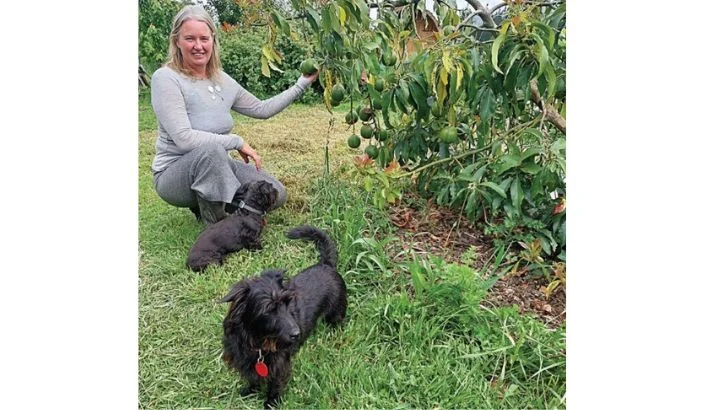
Most people who adore avocados might dream of owning a few productive trees, but Golden Bay local Sarah Sherratt has taken a different approach. Her love of avocados has led her into a compact and productive venture that runs on just 70 square metres—proving you don’t need hectares to grow something worthwhile.
“I love avocados, I don’t think you could ever get sick of them,” Sarah laughs. While some with a few hectares might plant a commercial block, Sarah has created a small but efficient setup for raising avocado trees for the market.
Avocados only crop every second year, and according to Branch Tree, a seven-year-old avocado tree can produce around 300 fruits annually.
“Harvest timing, fruit size and yield all depend on the tree’s variety, soil and climate,” Sarah adds.
Sarah began growing avocado trees about six years ago. “I grow a specific variety, Zutano, which is fast-growing and disease-resistant,” she explains.
Sarah grafts her trees using scion wood collected from established Golden Bay trees with unique traits - big fruit, excellent flavour, or the rare ability to fruit all year.
While it’s often said you need two avocado varieties for pollination, Sarah says that’s not entirely true. Avocados rely on insects – usually honey bees – and many orchards use two cultivars so male and female flowers overlap. However, research from Science Learning Hub NZ shows bees mostly visit flowers on the same tree, making cross-pollination less effective. Unlike kiwifruit, avocado pollen can’t be artificially applied as it doesn’t survive the process, but most people with a single tree still achieve successful pollination.
What began as a hobby alongside her full-time job is now edging toward profit. A free course through Te Wānanga o Aotearoa gave her the confidence to grow.
“The course was great – I’d definitely recommend it. It covered a wide range of business topics and left me inspired, with a plan for future growth.”
One of the joys for Sarah is the quality that comes from having her own trees for personal consumption.
“They’re a game changer. You can pick them perfectly ripe, which you can’t get when buying.”
She’s also fascinated by their growth cycle – tiny pea-sized fruit slowly enlarging over a year, then hanging on the tree until picked, unlike apples or pears that drop and rot if left too long.
Sarah grew up on a mixed sheep and beef farm, raised by what she fondly calls “back-to-landers,” who grew nearly all their own meat and vegetables.
Despite admitting she isn’t great with houseplants, she has a real talent for raising trees. Her process begins with growing rootstock from seed - these form the disease-resistant, sturdy base. She then grafts on scion wood, a small twig taken from a productive adult tree. After nurturing the grafted trees in her glasshouse, they are ready for a new home at two years old.
Locally grown trees, she says, also have an important advantage. “Most available trees currently come from Northland or Gisborne, so they’re not always suited to the Top of the South climate.”
Her experience and output continue to grow. Recently, she produced several hundred Harricado trees for a special order. Harricado is a new variety discovered by Nelson orchardist Harry Pearson - self-fertile, non-fibrous, creamy, nutty, and unusually cold-tolerant.
It’s also thought to resist Phytophthora, the root disease that devastates many avocado orchards.
