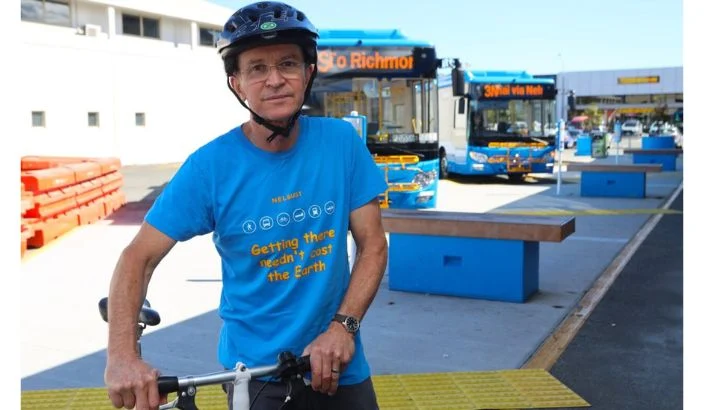
A suite of proposed rule changes affecting alternative modes of transport have been welcomed by local advocates.
Last week, Transport Minister Chris Bishop announced several proposals to make transport rules clearer and safer.
The changes would allow children 12 years old and younger to ride their bikes on the footpath, let e-scooters to use cycle lanes, mandates that motorists leave a gap of at least 1 metre when passing cyclists and horses, and requires drivers travelling under 60kmh to give way to buses pulling out of bus stops.
“This is about safer school rides, smoother bus trips, clearer guidance for drivers,” the Minister said.
Convenor of Bicycle Nelson Bays, Bevan Woodward, says the proposals are “really positive” and “well overdue”.
“It all makes sense. It’s good, practical changes, and we welcome them.”
Currently, a passing distance of 1.5 metres is only recommended.
The Government’s proposal would see a 1 metre passing distance for drivers travelling up to 60km/h and 1.5m for those travelling faster enshrined in law.
“It’s great to see that coming. If that becomes a legal requirement, it recognises that cyclists are legitimate road users whose safety is paramount,” Bevan says.
While, “ideally”, there would be a larger gap than 1m at the slower speeds, he expected most drivers to “interpret that generously” and overestimate the distance.
Allowing children to cycle on the footpath was also a “big step forward”, which he hoped would encourage more parents to let their children bike to school.
However, he added that kids on bikes would need to give way to pedestrians, and emphasized that they, and motorists, must navigate driveways “really carefully” due to the potential danger posed by cars pulling in and out.
Peter Olorenshaw, convenor of local sustainable transport advocacy group Nelsust, thinks having children cycling on the footpath should be an “interim step”.
He says children were safer on the footpath than the road but, as someone who also sits on the region’s accessibility forum, he added that their presence could impact the confidence of older, less mobile, people using the footpath and keep them from going for a walk.
“For older people, that can be quite a negative outcome.”
If bicycles were remaining on the footpath, Peter would like to see demarcated one-directional cycleways put next to footpaths and at the same level, which he says will allow cyclists and pedestrians to travel adjacent to in a safe and controlled manner.
However, he adds that the change requiring vehicles travelling under 60kmh to give way to buses pulling out of stops was something Nelsust had been seeking.
“That’s fantastic. It just makes buses flow better; they won’t have to wait in a line of traffic to get back out into the road… It’s not a game changer, but it’s helping.”
Tasman District Council didn’t have an official position on the proposals, but transportation manager Jamie McPherson says that changes which improve people’s understanding of what to expect when using the road is beneficial.
“Previous counts have shown cycling on some of our footpaths is quite common and likely reflects that many cyclists feel unsafe on our busy urban roads, especially near intersections.”
He adds the proposals could increase demand for wider footpaths.
“So, any additional financial assistance the Government could offer to enable footpath widening… would be a great way to alleviate concerns of pedestrians.”
The New Zealand Transport Agency is consulting on the changes until 25 March.