
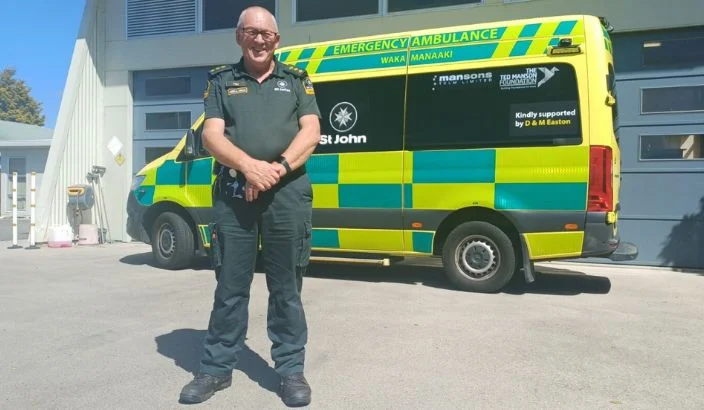
There’s a bad-taste joke to be found somewhere in Tim Creagh’s line that helping people was “kind of in the blood”, but the ambulance officer is too professional to point it out.
Tim is working his last shift at the Motueka Hato Hone St John station this Friday, after 16 years with the team and a lifetime of first aid work behind him.
He reckons that during his time on the job he has pretty much met every whānau in Motueka.
“I’ve seen generations of families,” he says. “It hasn’t been uncommon to go to a call to someone I know.”
His dad was a volunteer fire fighter and so Tim says he has “grown up with emergencies”. He joined St John as a cadet at eight and never looked back.
The service has changed significantly during his tenure. More diagnostics and treatments now happen in the field, and Motueka’s growing population has seen callouts rise sharply.
“When I first started here, it wouldn’t be uncommon for us to sit here all day and night with nothing to do.”
Now, the station receives about five or six callouts in a 24hour period. The Motueka station is also now staffed entirely by paid ambulance officers, while Tākaka has paid staff during the week. Collingwood and Tapawera remain fully volunteer run.
When asked what it takes to work in the ambulance service, Tim says it begins with compassion, care and being people focussed.
“The rest of it you learn as you go.”
About three years ago Tim moved into the group operations manager role for Nelson Tasman, overseeing the paid workforce in Motueka and Tākaka as well as volunteers across the region. Although the role took him away from shiftwork and into a Monday-to-Friday schedule, he still spent plenty of time on the ambulance.
Even after all these years, the unpredictability of the job still excites him.
“There is still the odd shot of adrenaline,” he says – and not just the kind carried in his ambulance kit.
Tim is now heading to Broken Hill in Australia with his wife Jill, who has taken a role as the afterhours duty manager at the local hospital.
“Mines, emus, kangaroos and snakes” is how he describes his new landscape with a laugh. He is putting out feelers for work too, open to staying in the same field or trying something new.
He says he will miss his colleagues, and the friendships he has formed in Motueka.
“Everything I’ve done has been supported by somebody, somewhere.”

